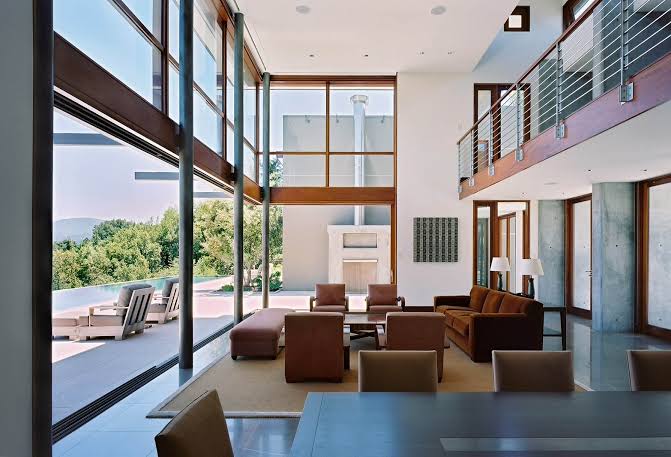
There is something slightly absurd about needing an engineer to fix a door.
Not that long ago, a back door was a fairly uncomplicated object. Hinges on one side. Handle on the other. Perhaps a multipoint lock if it was relatively modern.
Now we have glass panels the size of walls travelling across precision tracks, bifold systems with half a dozen interconnected leaves and locking arrangements that can stop cooperating because one component has moved by a few millimetres.
They look considerably better.
I’m not entirely convinced they’re always better to live with.
The popularity of enormous glazed openings has transformed British extensions, but it has also created a generation of homeowners discovering that spectacular doors can be surprisingly complicated pieces of machinery. Demand for bifold door repairs is part of that story.
The question isn’t whether large glass doors are good or bad.
It’s whether we’ve reached the point where we’re asking too much from something that still needs to function as an ordinary door.
We got obsessed with removing the wall
Watch the progression of home renovation over the last 20 years and it’s quite striking.
First we wanted French doors.
Then wider French doors with glass panels either side.
Then sliding patio doors returned.
Then bifolds arrived and suddenly opening half the wall wasn’t enough. We wanted the entire thing gone.
Today, large rear extensions are often designed around the glazing.
Kitchen island here. Dining table there. Six metres of glass across the garden elevation.
Architectural drawings look beautiful.
Estate agent photographs look even better.
On the right summer afternoon, with every panel folded neatly away, it is easy to understand the appeal.
But there’s a practical consequence to replacing a simple doorway with an enormous moving structure.
Complexity.
More hinges. More rollers. More seals. More locking points. Longer tracks. Heavier glass.
More things that need to remain correctly aligned.
And eventually, more things capable of wearing out.
A wall doesn’t move. A six-metre door does
That’s the bit people perhaps don’t appreciate until they’ve owned one for a few years.
Large glazed systems aren’t simply oversized doors.
Mechanically, they’re quite different.
Take a bifold system spanning most of a rear extension. Every panel has considerable weight. That weight has to travel through rollers and guides while several leaves remain correctly positioned relative to one another.
Then the system has to fold.
Then unfold.
Then return to exactly the right position for multiple locking points to engage.
Do that thousands of times.
Outside.
In Yorkshire.
Through freezing mornings, damp winters and increasingly hot summer afternoons.
It’s impressive that good systems cope as well as they do.
But expecting them never to need adjustment seems optimistic.
Bigger panels brought bigger loads
Glass has improved enormously.
Modern units provide excellent thermal performance while manufacturers can produce impressive panel sizes that would once have been impractical in ordinary homes.
That opened up architectural possibilities.
It also created weight.
A large double or triple-glazed sliding panel can be extremely heavy. You might move it with one hand, but that’s because the running gear underneath is doing the hard work.
When those rollers are healthy, everything feels effortless.
Once they start wearing, you discover how much weight was there all along.
The change tends to happen gradually.
At first the door needs a slightly firmer pull.
Months later, you use your whole arm.
Eventually, opening it becomes a two-handed job.
People often blame the track at that point, sometimes spraying lubricant into it in the hope that everything will start gliding again.
If worn rollers are carrying a huge glazed panel badly, no amount of spray is going to make them new again.
Complexity is fine until diagnosis becomes guesswork
This is where modern doors can become frustrating.
The symptom doesn’t always tell you which component has failed.
A handle feels stiff.
Is it the handle?
Maybe.
Or the gearbox.
Or the locking strip.
Or the keeps.
Or perhaps none of them.
The door may have dropped fractionally, meaning a perfectly functional locking mechanism is now being forced against components that no longer line up correctly.
Replace the lock without correcting the alignment and the new one gets subjected to exactly the same strain.
This is why UPVC mechanism repairs can involve far more diagnosis than homeowners expect.
The broken part is sometimes merely the final casualty.
Finding out what killed it is the useful bit.
Bifolds multiply the possible failure points
A standard hinged door might have three hinges and one locking system.
Add panels and everything multiplies.
One roller begins wearing differently.
One hinge loosens slightly.
One panel drops.
That panel then interacts differently with the next panel.
The locking points don’t quite meet.
Someone starts pushing harder to close the doors.
Now the lock is under additional strain too.
Nothing necessarily looks dramatically broken.
That’s why these problems can be irritating.
A homeowner might reasonably think: “They’re doors. Why can’t somebody just fix the bit that’s broken?”
Because sometimes there isn’t one broken bit.
There is a collection of small changes that have pushed the whole system out of tolerance.
Sliding doors are simpler – but we’re making those enormous too
The renewed popularity of sliding doors partly reflects a reaction against bifold complexity.
Instead of folding six panels together, why not use two or three huge panes that slide past each other?
Architecturally, this can look cleaner.
Fewer vertical sightlines. Bigger uninterrupted views. Less visible hardware.
Mechanically, sliding systems can be simpler too.
But again, size changes things.
Very large panels place substantial loads on their running gear. Tracks need to remain clean and properly supported. Rollers need to carry weight evenly.
A tiny problem underneath a small patio slider is irritating.
The same issue beneath a huge modern glazed panel can make the door genuinely difficult to move.
Then homeowners compensate with force.
That’s where secondary damage starts.
We’ve turned doors into furniture
There is also a strange change in how these products are sold.
Doors used to be chosen primarily because you needed a door.
Now large glazed systems are often treated almost like interior design features.
Frame colour matters.
Sightline thickness matters.
Handle finishes matter.
How they photograph matters.
None of that is unreasonable.
But the mechanical specification isn’t nearly as exciting to discuss.
Nobody posts photographs on Instagram of high-quality rollers.
A beautifully engineered locking strip doesn’t make the front page of a home magazine.
Running gear is invisible until it stops running.
That creates an odd buying environment where the components responsible for making a £10,000 glazed system usable can receive less attention than the exact shade of grey used on the frame.
The showroom experience doesn’t help
Showroom doors are brilliant.
Of course they are.
They’re clean.
They’re new.
They’re perfectly adjusted.
Nobody’s Labrador has dragged half a flowerbed through the track.
They haven’t experienced seven winters.
The building around them hasn’t settled.
Nobody has slammed them 4,000 times.
You push one panel gently and the entire system glides aside.
Sold.
Real houses aren’t showrooms.
Tracks fill with grit. Children use doors differently from adults. Frames heat up in direct sun. Extension structures move fractionally. Locks wear.
The showroom demonstrates what the product can do.
It doesn’t necessarily demonstrate what owning it for twelve years feels like.
A tiny stone can defeat very expensive engineering
This might be my favourite contradiction with modern glazing.
We can engineer enormous glass doors to remarkably tight tolerances.
Then a tiny piece of gravel gets involved.
Garden-facing tracks collect everything.
Mud.
Sand.
Grass.
Pet hair.
Small stones.
Bits of leaves.
The more seamless the transition between kitchen and patio, the easier it can be for outdoor debris to travel across that threshold.
Once contamination reaches running gear, it gets repeatedly crushed and dragged beneath significant weight.
A homeowner hears a grinding noise but the door still opens.
So it gets ignored.
Six months later the movement is rougher.
A year later the rollers may be damaged.
Very sophisticated door.
Defeated by a pebble.
Heat has made tolerances more noticeable too
Hotter summer spells have introduced another irritation.
Materials expand.
A correctly designed and installed system accommodates normal thermal movement, but doors that have already drifted slightly out of alignment have less tolerance available.
That’s why some bifolds suddenly become awkward during hot afternoons.
They were already close to rubbing.
Heat simply closes the remaining gap.
Dark aluminium frames can make this particularly noticeable when exposed to strong direct sunlight.
Then evening arrives, temperatures fall and the doors seem better again.
The homeowner assumes the problem fixed itself.
Until tomorrow afternoon.
Older houses weren’t designed around precision glazing
There’s another factor that’s particularly relevant across West Yorkshire.
A lot of our housing stock is old.
Perfectly solid, perfectly serviceable houses, but old.
Then somebody adds a modern rear extension and inserts an enormous precision-engineered glazed opening into it.
The new extension settles.
The original building moves slightly through the seasons.
Different materials expand differently.
None of this needs to indicate a structural problem.
But doors notice.
A few millimetres of movement across a large opening can affect how panels meet, how locks engage and how rollers sit.
A conventional timber door might simply become a bit tight.
A multi-panel bifold system starts having disagreements with itself.
Repairs can become a parts hunt
Complexity creates another issue as doors age.
Parts availability.
Manufacturers update systems. Hardware ranges change. Suppliers disappear. Product lines get discontinued.
Ten or fifteen years later, a perfectly decent door might need one specific roller assembly or locking component that is no longer sitting on a merchant’s shelf.
This happens increasingly with older patio systems.
The frames and glass can be completely usable, yet finding compatible mechanical components becomes the difficult part of the repair.
Replacement is sometimes suggested because it’s easier commercially.
That doesn’t automatically mean it’s necessary.
Older sliding patio doors can often have considerable life left in them if the correct hardware can be identified and sourced.
It just takes more effort than swapping a standard component.
Yet people don’t want to go backwards
Here’s the contradiction.
Despite all these complaints, very few homeowners with a beautiful wide garden opening want to brick half of it back up and install a normal back door.
Of course they don’t.
Large glazing changed British homes for good reasons.
It brings light into previously dark kitchens.
It creates views of gardens that used to be hidden behind walls.
It makes modest houses feel larger.
During summer, opening an entire elevation genuinely is fantastic.
The benefits are real.
So are the maintenance requirements.
Both things can be true.
Perhaps the problem is expectation rather than engineering
Maybe huge glass doors aren’t too complicated.
Maybe we just continue thinking of them as ordinary doors.
Nobody expects a complicated mechanical product to work indefinitely without maintenance.
Cars need servicing.
Boilers need servicing.
Garage doors get adjusted.
Even bicycles need gears and brakes setting up occasionally.
Yet large bifold systems somehow inherited the old “maintenance-free” language associated with UPVC windows.
That’s a difficult promise for something containing numerous moving parts.
Low maintenance?
Certainly possible.
No maintenance?
Different matter.
Simpler still has something going for it
There is a reason some old patio doors keep surviving.
They’re basic.
Two panels. Straightforward rollers. A relatively uncomplicated lock.
Twenty years later they might look dated, but plenty can still be repaired.
Sometimes simplicity ages remarkably well.
That doesn’t mean everyone should abandon architectural glazing and reinstall 1990s patio sliders.
It does suggest that complexity should be considered alongside appearance when buying replacements.
How many moving panels do you actually need?
What hardware is underneath them?
Can replacement parts be obtained?
Who manufactured the running gear?
How is the track supported?
Those questions aren’t remotely exciting.
They may matter far more in ten years than the brochure photography does.
Large glazed doors aren’t disappearing. If anything, extensions continue pushing towards wider openings, slimmer frames and larger individual panes.
Engineering will keep improving too.
But there is a point where a door stops being merely a door and becomes a fairly sophisticated moving structure attached to the back of a house.
Perhaps we should start treating it like one.